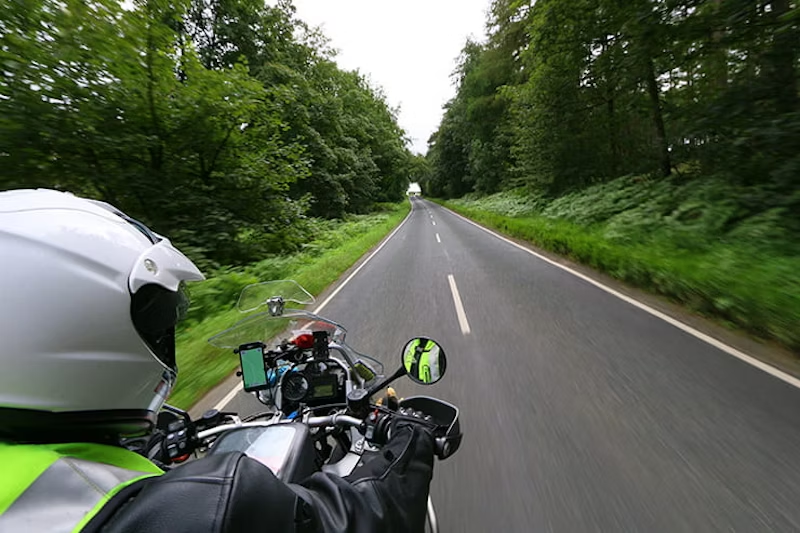
If you’ve ever ridden a sport bike, you know the feeling.
You twist the throttle…
Your body leans forward…
The engine screams toward redline…
Wind pressure hits your chest…
And suddenly, 60 mph feels like 120.
But here’s the surprising truth:
Sport bikes often feel much faster than they actually are.
So why does this happen? Is it just adrenaline? Or is there real science behind it?
Let’s break down the psychology, physics, and design elements that make sport bikes feel insanely fast — even at moderate speeds.
🏍️ 1️⃣ Riding Position Changes Your Perception


4
Sport bikes are designed with an aggressive, forward-leaning posture:
- Low clip-on handlebars
- Rear-set foot pegs
- High tail section
This position does two things psychologically:
🔹 You Feel Closer to the Ground
Being leaned forward lowers your head and chest closer to the road. The ground appears to rush beneath you faster.
🔹 Wind Pressure Feels Intense
At just 60–70 mph, wind resistance pushes against your chest and helmet. That pressure tricks your brain into thinking you’re going much faster.
Compare that to a cruiser or touring bike where you sit upright — the same speed feels calmer and slower.
Posture changes perception.
🧠 2️⃣ Engine Sound Amplifies the Sensation


4
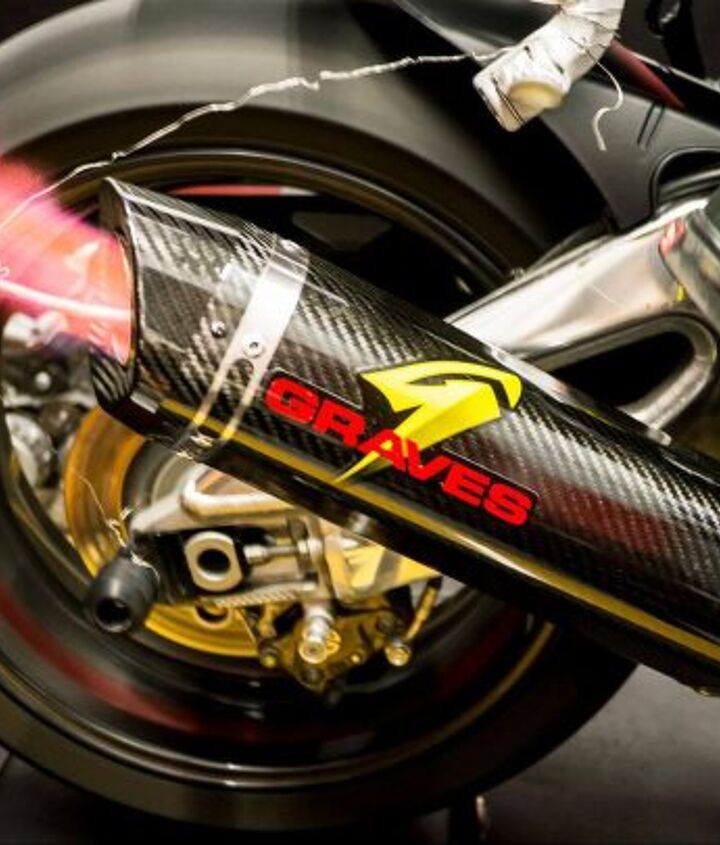
Sport bikes rev high — often 12,000 to 15,000 RPM.
That high-pitched engine scream creates intensity.
Your brain associates:
- High pitch
- Rapid RPM climb
- Sharp throttle response
With danger and speed.
Even if you’re going 50 mph in second gear, the engine sound makes it feel dramatic.
By contrast, a large cruiser at 50 mph may be running at 2,500 RPM — calm, deep, relaxed.
Sound strongly influences how we interpret motion.
👀 3️⃣ Visual Speed Perception (Ground Flow Effect)

4
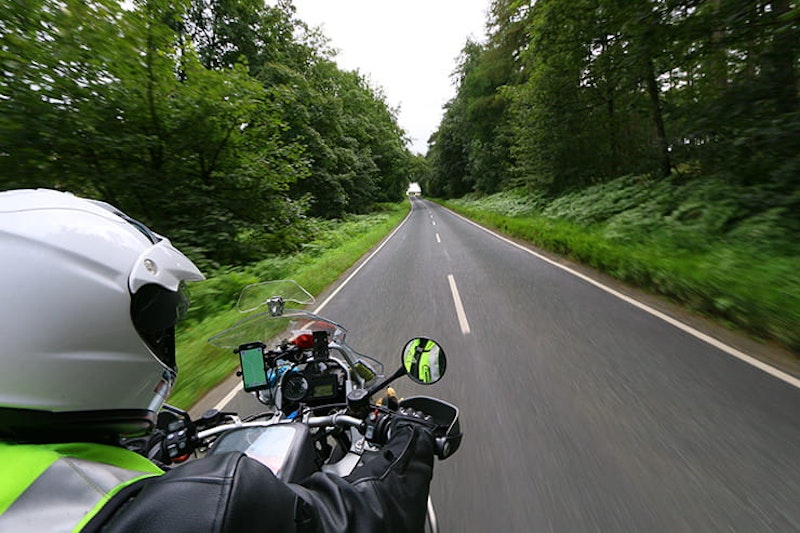
Your eyes measure speed based on how quickly objects pass by.
Sport bikes:
- Sit lower
- Have shorter wheelbases
- Position your eyes closer to the pavement
When your eye level is low, roadside objects appear to move faster.
This is the same reason go-karts feel insanely fast even at low speeds.
Lower perspective = amplified speed sensation.
⚡ 4️⃣ Quick Acceleration Increases Adrenaline
Sport bikes are designed for:
- Rapid throttle response
- High power-to-weight ratio
- Quick acceleration bursts
Even if you’re not going extremely fast, the rate of acceleration triggers adrenaline.
Your body responds to acceleration more than top speed.
Example:
- Accelerating from 20–60 mph quickly feels intense.
- Cruising steadily at 80 mph can feel stable and calm.
Your nervous system reacts to change — not just speed itself.
🏁 5️⃣ Aerodynamic Design Enhances the Drama


4
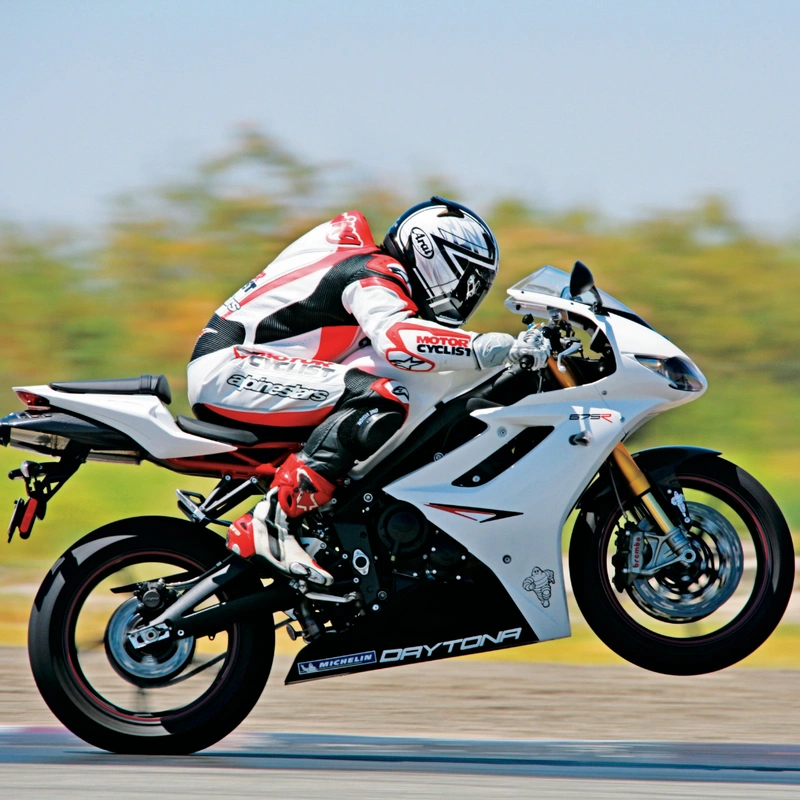
Sport bikes are built with aggressive fairings and sharp body lines.
These design cues signal speed visually — even when stationary.
Sharp angles, race-inspired graphics, and compact builds make your brain interpret the machine as “fast.”
Your expectations shape your experience.
If something looks fast, your brain prepares for intensity.
🔊 6️⃣ Gear Ratios Make Lower Speeds Feel Aggressive
Sport bikes often have shorter gear ratios in lower gears.
That means:
- More RPM at lower speeds
- Faster throttle response
- More dramatic sound
You might be at 40 mph — but the engine feels like it’s working hard.
This makes everyday speeds feel like race pace.
🧬 7️⃣ The Brain’s Speed Illusion Mechanism
The human brain measures speed based on:
✔ Sound
✔ Wind pressure
✔ Visual motion
✔ Body position
✔ Acceleration force
Sport bikes stimulate all five simultaneously.
That’s why 70 mph on a sport bike can feel like 100 mph in a car.
Cars isolate you:
- Sound insulation
- Wind protection
- Stable seating
Sport bikes expose you to sensation.
Less isolation = more perceived speed.
🏎️ 8️⃣ Comparison: Sport Bike vs Car Speed
Let’s compare 80 mph:
In a Car:
- Climate control
- Stable seat
- Little wind noise
- Low vibration
Feels calm.
On a Sport Bike:
- Wind pressure
- Engine screaming
- Body leaned forward
- Road visible directly below
Feels intense.
Same speed — totally different perception.
🔥 9️⃣ The Role of Adrenaline
Sport bikes trigger excitement.
Adrenaline:
- Increases heart rate
- Sharpens focus
- Heightens sensory input
Your brain associates that heightened state with speed and danger.
So even moderate speeds feel amplified.
It’s psychological — but very real.
🎯 🔟 Why This Can Be Both Good and Dangerous
Feeling fast at lower speeds can be beneficial:
✔ Makes riding exciting
✔ Reduces need to overspeed
✔ Enhances engagement
But it can also be risky:
❌ Riders may chase the sensation
❌ Speed creep without noticing
❌ Overconfidence builds quickly
Understanding perception helps you ride smarter.
Real-World Example
Many riders report:
“On my 600cc sport bike, 70 mph feels wild. On my touring bike, 90 mph feels stable.”
That’s perception in action.
The sport bike amplifies input.
The touring bike smooths it out.
Neither is wrong — they’re designed differently.
Does This Mean Sport Bikes Aren’t Fast?
Not at all.
Modern sport bikes are extremely capable machines.
But what makes them special is how they make ordinary speeds feel extraordinary.
You don’t always need triple-digit speed to feel the thrill.
That’s part of the genius of their design.
The Psychology of Speed in Summary
Sport bikes feel faster than they are because:
✔ Aggressive riding posture
✔ High-revving engine sound
✔ Low visual perspective
✔ Quick acceleration
✔ Wind exposure
✔ Short gear ratios
✔ Aerodynamic design cues
Your brain interprets all of that as intensity.
Final Thoughts
Sport bikes aren’t just engineered for performance — they’re engineered for sensation.
They amplify speed, even when you’re riding responsibly.
Understanding this psychology helps you:
✔ Control your riding
✔ Avoid unnecessary speeding
✔ Enjoy the thrill safely
Because the magic of sport bikes isn’t just how fast they go.
It’s how fast they feel.
And sometimes, that feeling is more powerful than the speedometer itself. 🏍️💨