

4
Loud exhaust.
Empty highways at midnight.
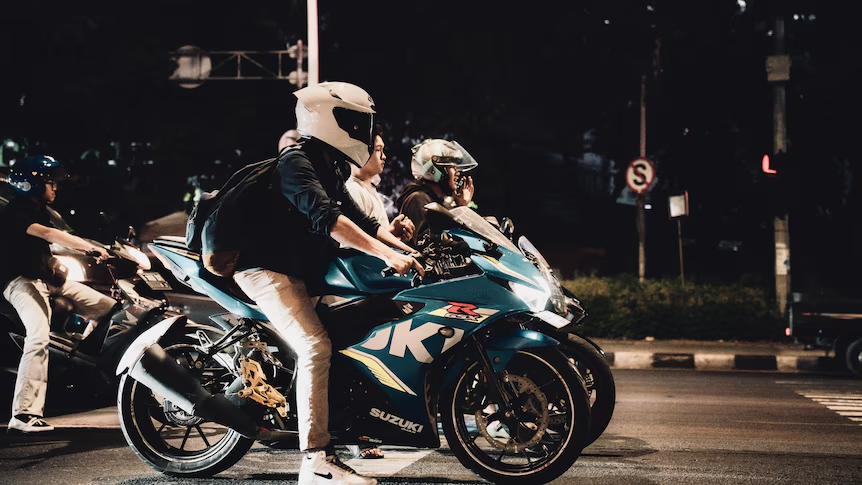
Two riders lined up at a red light.
Street racing has always carried a certain image — rebellion, speed, freedom.
Movies, social media clips, and viral reels have romanticized it for years. It looks thrilling. It feels fearless.
But here’s the real question:
Is street racing actually the ultimate expression of performance riding — or is it a misunderstood culture built on illusion?
Let’s break down the myths and compare them with reality.
Myth 1: Street Racing Is Pure Skill
The image suggests that street racers are elite riders pushing machines to their limits.
Reality?
Street racing is unpredictable — not professional.
Unlike a racetrack:
- Roads have potholes
- Sand or oil can appear unexpectedly
- Traffic is uncontrolled
- Pedestrians may cross
- Signals and intersections create danger
True skill is tested in controlled environments.
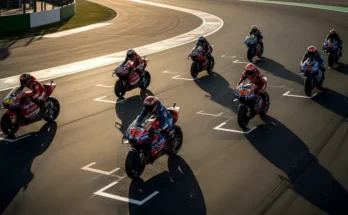
Professional performance riding happens on closed circuits — not public roads.
Riding fast in chaos isn’t always skill. Sometimes it’s just risk.
Myth 2: More Speed Equals More Respect
In street racing culture, top speed often equals status.
The fastest bike wins.
The loudest exhaust dominates.
The highest horsepower commands attention.
But modern performance riding is evolving.
Today’s serious riders care more about:
- Cornering technique
- Lap consistency
- Braking precision
- Body control
On the track, speed isn’t about ego — it’s about refinement.
Respect in real riding communities comes from control, not recklessness.
Myth 3: It’s Just Harmless Fun
Many believe late-night street racing is victimless.
Reality is harsher.
Street racing increases:
- Accident probability
- Legal consequences
- Risk to innocent drivers
- Insurance penalties
- Vehicle confiscation
One mistake on a public road can affect families, bystanders, and lives.
Modern performance riders are shifting toward:
- Track days
- Drag strips
- Organized motorsport events
Because adrenaline feels better when it doesn’t come with court dates.
Myth 4: Track Riding Is Boring Compared to Streets
Some riders assume racetracks are too structured — less exciting than city highways.
The opposite is true.
On a racetrack:
- You can brake later
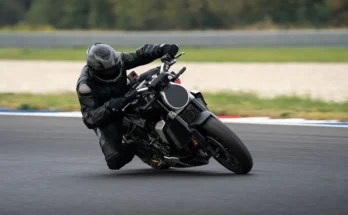
- Lean deeper
- Open throttle fully
- Push limits safely
There are no surprise pedestrians.
No random cars.
No traffic lights.
Just you, your machine, and pure performance.
Street racing limits you.
Track riding unlocks you.
Myth 5: Street Racing Builds Real Confidence
Street racing often builds ego — not skill.
Confidence built on uncontrolled environments is fragile.
Real confidence comes from:
- Understanding braking points
- Mastering throttle control
- Improving body position
- Studying racing lines
Modern performance riding focuses on growth, not showing off.
Confidence earned on track transfers everywhere.
Confidence built on streets disappears under pressure.
The Psychology Behind Street Racing Culture

4
Street racing culture is not just about speed.
It’s about:
- Belonging
- Identity
- Recognition
- Adrenaline
Social media has amplified this culture.
Short clips showing wheelies, roll races, and highway pulls gain millions of views.
But what you don’t see:
- Crashes
- Legal consequences
- Injuries
- Financial losses
The highlight reel hides the cost.
The Legal Reality
In many countries, street racing can result in:
- Heavy fines
- License suspension
- Criminal charges
- Vehicle seizure
- Jail time (in serious cases)
Authorities worldwide are increasing penalties due to rising incidents.
Modern riders are realizing something important:
Losing your license means losing your freedom — not proving it.
The Rise of Modern Performance Riding
Performance culture is evolving.
Today’s serious riders prefer:
- Organized track days
- Time attack competitions
- Drag racing events
- Skill development workshops
Why?
Because real speed demands discipline.
On a track:
You measure lap times.
You analyze performance.
You refine technique.
You improve safely.
It’s not about proving something at a red light.
It’s about proving something to yourself.
The Financial Reality
Street racing often leads to:
- Crash damage
- Medical bills
- Insurance cancellation
- Legal expenses
Track riding may cost entry fees, but it prevents massive unexpected losses.
Modern riders understand that performance is an investment — not a gamble.
Social Media vs Real Riding
Online content makes street racing look glamorous.
But edited clips hide:
- Failed runs
- Close calls
- Mechanical failures
- Consequences
Real performance riding is slower to trend — but longer lasting.
True riders focus on longevity.
Not viral moments.
So, Is Street Racing Always Negative?
Not everyone involved has bad intentions.
Many riders simply love speed and adrenaline.
The problem isn’t passion.
The problem is location.
Speed belongs on tracks.
Public roads belong to everyone.
Modern riding culture is not about killing excitement — it’s about channeling it properly.
Final Thoughts: Evolution of the Rider
Street racing once symbolized rebellion.
Today, evolution symbolizes maturity.
Modern performance riding means:
- Controlled aggression
- Calculated risk
- Continuous improvement
- Respect for safety
The real flex is not blasting past traffic at midnight.
The real flex is mastering your machine on a circuit — improving lap after lap — and riding home safely.
Because at the end of the day:
Skill lasts.
Reputation lasts.
Life lasts.
But reckless moments don’t.